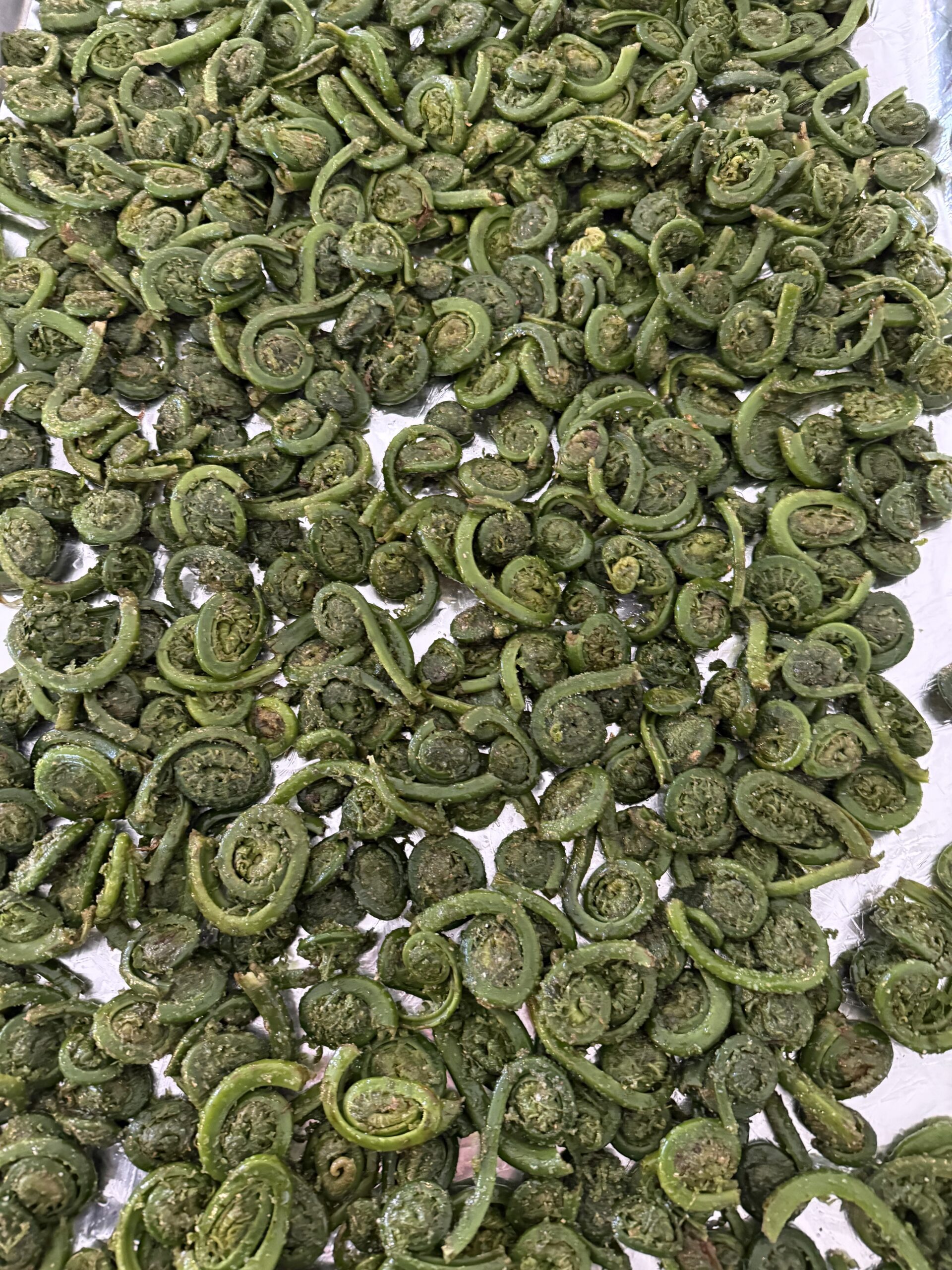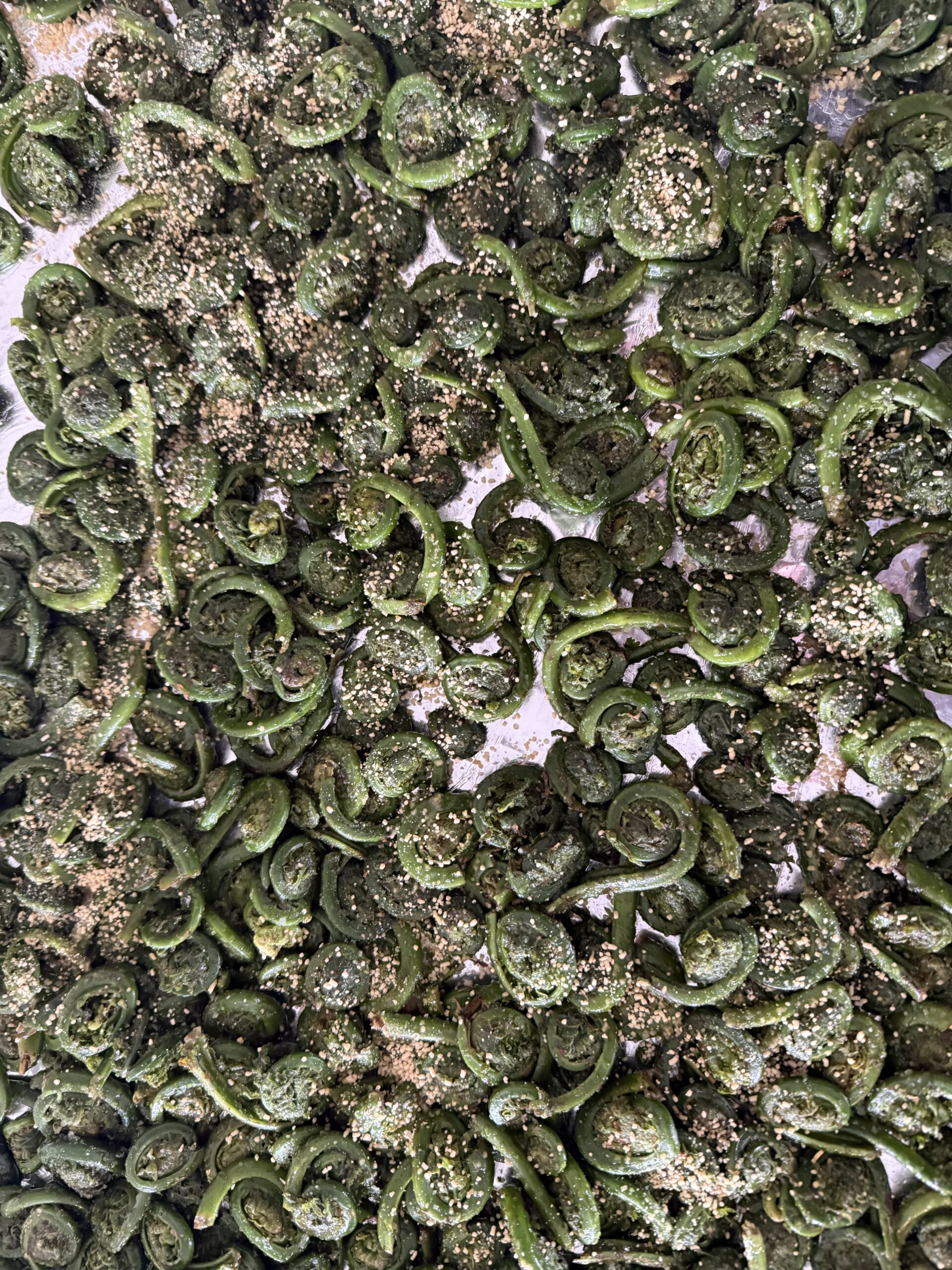
FIDDLEHEADS
Today’s Lesson: Fiddlehead ferns are one of spring’s most fleeting wild foods, appearing for only a short window before the tightly curled shoots unfurl into full fern fronds. Today we will prepare them in an elegant mushroom-and-cream ragout that respects both their delicate flavor and their food-safety requirements.
What Exactly Are Fiddlehead Ferns? A “fiddlehead” is not a species of fern, but a stage of growth: the young, coiled shoot of a fern before it opens. The edible fiddlehead most often sought in northeastern North America is the ostrich fern, Matteuccia struthiopteris, whose coiled fronds resemble the scroll at the end of a violin, giving fiddleheads their name.
Ostrich fern fiddleheads are prized for their deep green color, tender bite, and woodsy flavor, often compared to asparagus, green beans, and artichoke. They should be identified carefully: true ostrich fern fiddleheads have a smooth stem, a deep U-shaped groove on the inside of the stem, and a brown papery covering when young.
Other ferns may also produce curled shoots, but that does not make them safe to eat. Bracken and foxglove ferns are specifically warned against because they may be toxic or carcinogenic.
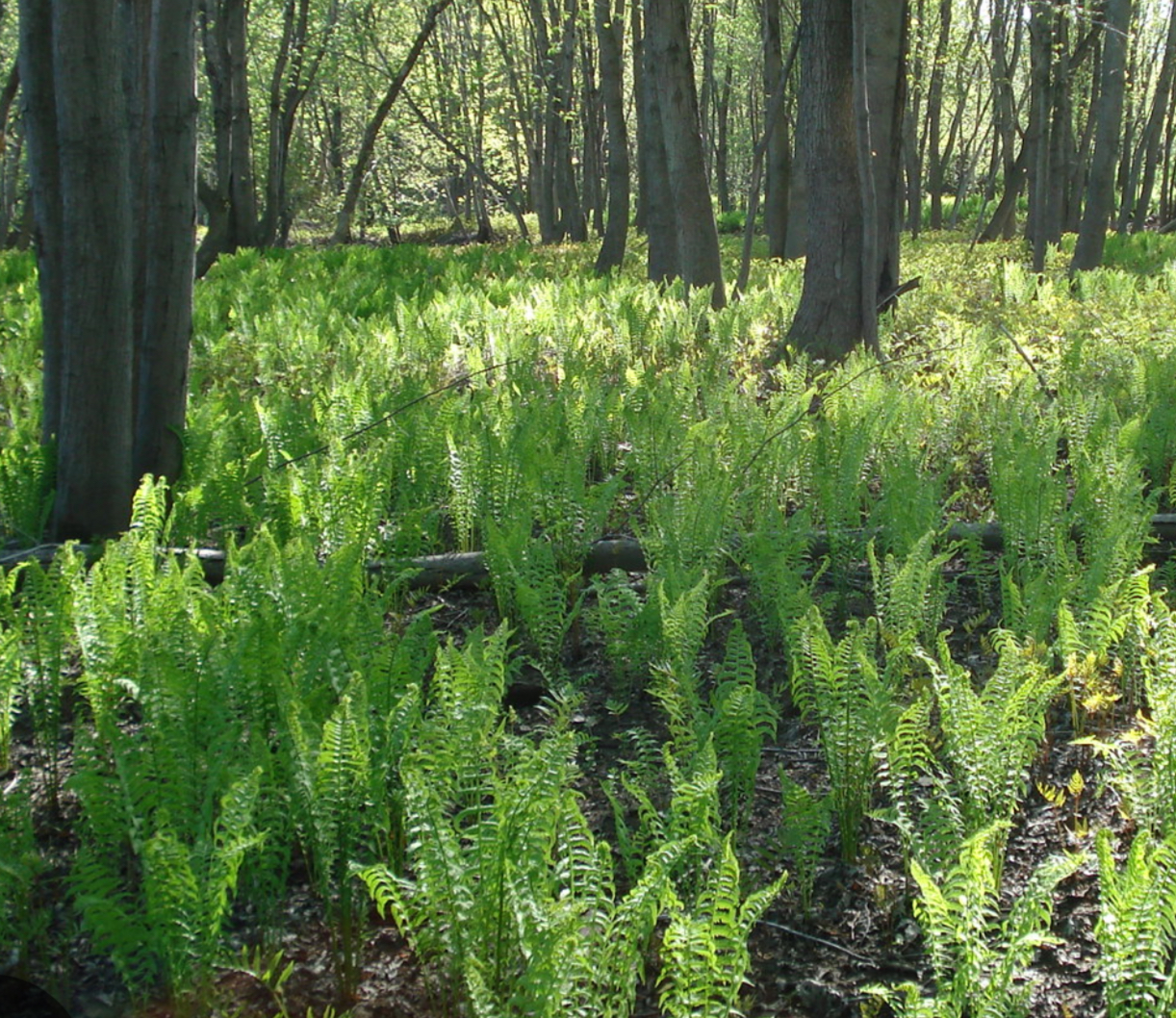
Where Do Fiddleheads Come From? Ostrich ferns grow in cool, moist places, especially along stream and river floodplains under partial shade. In Maine, fiddleheads begin emerging in late April in the southern part of the state and appear in mid- to late May in far northern Maine, but the harvest season in any one location is brief because the shoots grow quickly.
Fiddleheads have long been part of regional spring cooking, and the University of Maine notes that Native Americans were the first to eat them in Maine. Their short season is part of their appeal: they arrive just after the thaw, when the kitchen is ready for something green, wild, and fresh.
Why Should I Care About Eating Them? Fiddleheads are a true seasonal food. They cannot be meaningfully separated from spring, mud, thawing rivers, and the old practice of gathering food at exactly the moment nature offers it.
They also bring contrast to the plate. Their flavor is green and slightly nutty, their texture is firm when cooked correctly, and their curled shape gives a dish a visual elegance that ordinary vegetables rarely provide.
Why Do They Taste So Good? Fiddleheads taste good because they combine the freshness of a young green vegetable with the faintly earthy character of a wild food. Their flavor sits somewhere between asparagus, green beans, young spinach, and artichoke, which makes them especially good with butter, cream, mushrooms, lemon, vinegar, eggs, seafood, and aged cheeses.
In this recipe, mushrooms deepen the woodsy side of the fiddleheads, while cream softens their slight bitterness. Chives bring back the flavor of spring, and Parmesan adds salt, nuttiness, and depth.
Health Advantages and Nutrition Fiddleheads are low in calories and contain useful nutrients, including vitamin C, iron, potassium, fiber, and protein; one cup of cooked fiddleheads is listed as having 46 calories, 3 grams of fiber, 6 grams of protein, 31 milligrams of vitamin C, 2 milligrams of iron, and 501 milligrams of potassium. They should be enjoyed as a seasonal vegetable, not treated as a supplement or eaten raw for “maximum nutrition,” because proper cooking is essential for safety.
Important Health Warning: Fiddleheads must never be eaten raw or undercooked. Food-borne illness outbreaks linked to raw or undercooked fiddleheads have been reported in Canada and the United States since 1994, and the exact cause has not been identified.
Symptoms may include diarrhea, nausea, vomiting, abdominal cramps, and headaches, and they can appear within 30 minutes to 12 hours after eating improperly prepared fiddleheads. If symptoms occur after eating fiddleheads, especially in children, older adults, pregnant people, or anyone medically fragile, seek medical advice and consider contacting local public health authorities.
To prepare fiddleheads safely, remove the brown papery husk, wash them in several changes of cold water, boil them in plenty of water for 15 minutes or steam them for 10 to 12 minutes, and discard the cooking water. Fiddleheads should be fully cooked before they are sautéed, fried, baked, added to soups, or used in any composed dish.
Selecting Your Fiddleheads: Choose fiddleheads that are bright green, tightly coiled, firm, and fresh-looking. The best ones are usually compact, with short stems and no signs of softness, slime, dullness, or drying.
Some fiddleheads will still carry their brown papery covering, which is normal for young ostrich fern shoots. That covering should be removed before cooking, and the fiddleheads should be rinsed repeatedly until the water runs clean.
Store fresh fiddleheads cold and use them promptly. If freezing them, clean them first, blanch for two minutes, chill quickly in cold water, drain, pack, and freeze; then fully cook them before serving later.
A Note for Foragers: Only harvest fiddleheads if you can confidently identify ostrich fern. Look for the smooth stem, the deep U-shaped groove, and the brown papery covering on young shoots.
Harvest sustainably by taking no more than half of the fiddleheads from a healthy crown and leaving the rest to grow into fronds that feed the plant for the following year. Always get landowner permission before harvesting on private property.
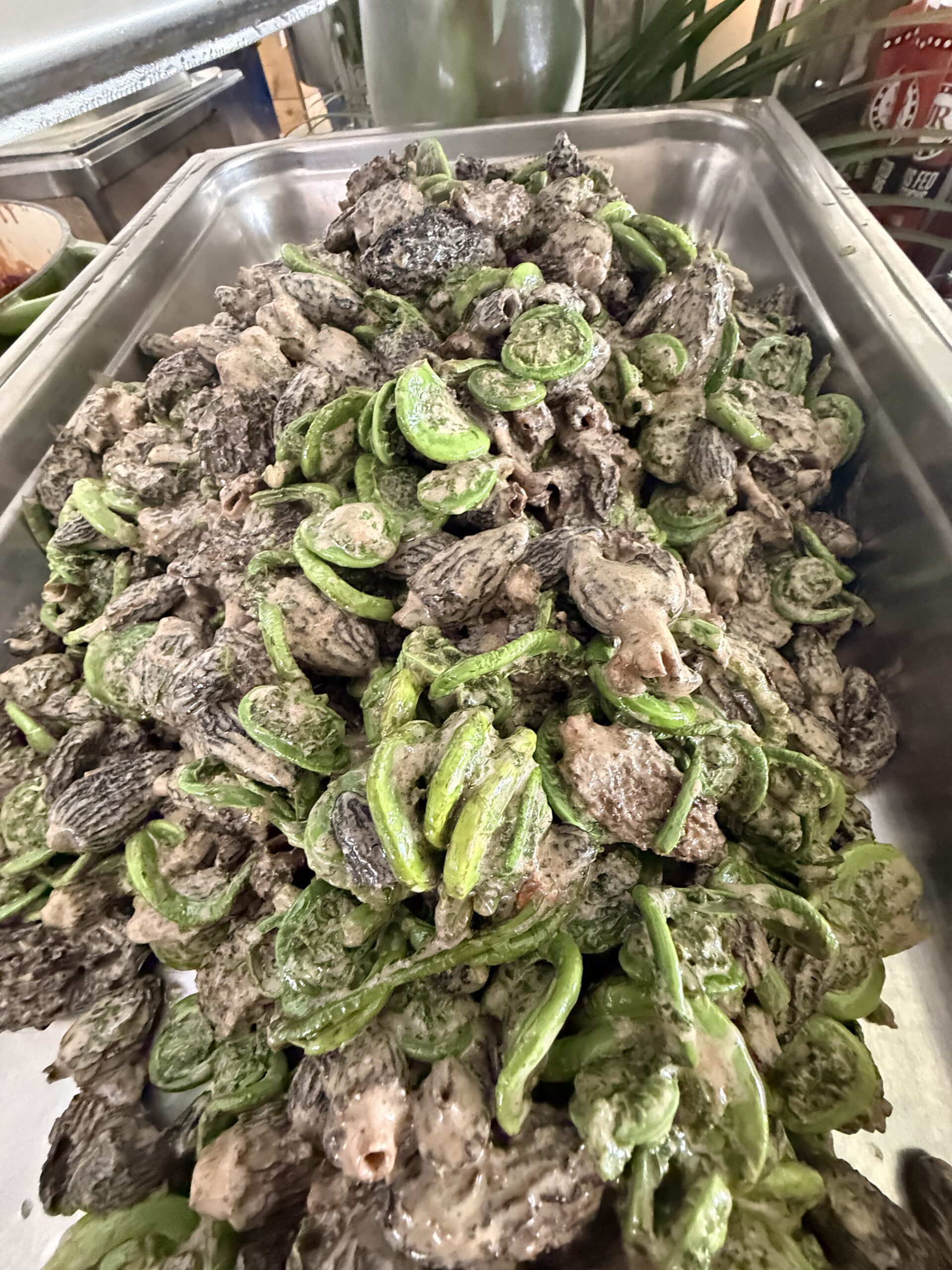
Fiddlehead Fern and Mushroom Ragout
Makes 4 servings
Prep time: 15 minutes
Cook time: 30 minutes
Ingredients
• 3/4 pound fresh fiddlehead ferns, cleaned and trimmed
• 2 tablespoons unsalted butter
• 2 tablespoons finely diced shallots
• 1 cup sliced brown field mushrooms
• 1 cup dry white wine
• 1 cup heavy cream
• Sea salt, as needed
• Freshly ground black pepper, as needed
• 1/2 cup snipped fresh chives, divided
• 1 ounce finely grated Parmesan cheese
Method: Trim the excess stem from the fiddleheads. Remove the brown papery membrane and rinse the fiddleheads in several changes of cold water until clean.
Bring a medium saucepan of salted water to a boil. Add the fiddleheads and boil until still al dente but FULLY cooked about 15 minutes, then drain and discard the cooking water. This step is required before finishing the fiddleheads in the sauce.
While the fiddleheads cook, melt the butter in a medium nonstick skillet over medium-high heat. Add the shallots and mushrooms and cook until the mushrooms are browned and their moisture has evaporated, about 5 minutes.
Add the white wine and cook until reduced by half, about 3 minutes. Add the cream, return to a gentle boil, and cook until thick enough to coat the back of a spoon, about 6 minutes.
Add the drained, fully cooked fiddleheads to the sauce and simmer briefly, just until heated through. Remove from the heat and stir in half of the chives.
Taste and adjust with salt and pepper. Spoon the ragout into warm rimmed soup plates, sprinkle with the remaining chives and Parmesan, and serve immediately.
Jimmy Schmidt (c)